#65 The Search Bar Truth: Stephan Bajaio on SEO, AI, and the Future of Marketing


 Apple Podcasts
 Spotify
 RSS Feed
 Amazon Music
 RadioPublic
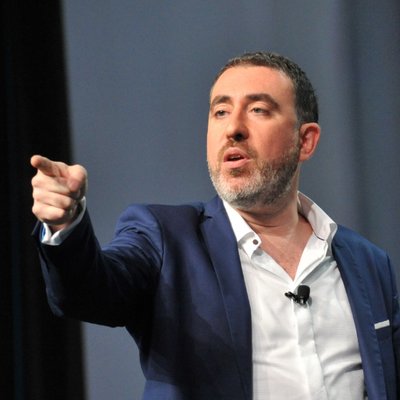
 What if the most honest data in marketing is what people type into a search bar at 2 AM? In this episode of the Podfather Podcast, we sit down with Stephan Bajaio, a 20-year veteran of the search industry who has helped giants like FedEx, Comcast, and Siemens navigate the digital landscape. Stephan, a co-founder of a half-billion-dollar SEO company, shares his incredible journey—from surviving a WeWork acquisition to buying his company back before the implosion. We dive deep into the "alphabet soup" of modern marketing (SEO, AEO, GEO, AIO) and why the "O" for optimization is the only thing that truly matters. Stephan also reveals his secrets for LinkedIn networking, the power of genuine recommendations, and why trying to "game" the new AI search models is a fool’s errand. Timestamps Timestamp Topic Description 0:00 Welcome & Introduction to Stephan Bajaio 1:16 The LinkedIn Name Pronunciation Hack: A tip for hard-to-say names 2:22 The Power of 80+ LinkedIn Reviews: Quantitative vs. Qualitative validation 4:10 How to Ask for Recommendations: The "Kind Words" script 5:34 Using Reviews as a Career Asset: The 40-page printout that landed a co-founder role 7:03 Reciprocal Reviews vs. Earned Credibility: Why your reputation is on the line 9:22 The "Other" Inbox: Dealing with the aggressive spam of podcast promoters 11:37 Burning Bridges: Why sales aggressiveness ruins potential partnerships 13:40 PodMatch and the Reality of "Mic and a Computer" Podcasts 15:04 Vibe Logic: Stephan’s new mission in digital marketing and technical SEO 27:51 The Alphabet Soup of Search: SEO, AEO, GEO, and AIO explained 30:46 The "Couch vs. Sofa" Data Trap: Why your ignorance is someone else's market share 31:58 Web Presence Intelligence (WPI): Placing your bets on the digital roulette table 33:40 The Unpredictability of LLMs: Why the same prompt gives different results 35:56 Personalization in AI: How your search history shapes your future answers 38:05 The 2000 Internet Boom Parallel: Overvaluations and the "Dial-Up" phase of AI 41:32 The Gold Rush Fallacy: Why the money is in the "picks and pans," not the gaming 43:08 Needs-Based Personas: Moving beyond "Paul the Pauper" to real consumer intent 69:16 How to Connect with Stephan: Cutting through the noise in his inbox 69:40 Outro: RoyCoughlan.com and the PodFather Network 🔗 Where to Find Stephan Bajaio •Agency: VibeLogic.io •LinkedIn: Stephan Bajaio (Mention the Podfather Podcast to cut through the noise!) 🔗 About Your Host (Roy Coughlan) •Listen to this episode on Podbean: https://podfather.podbean.com/e/stephan-bajaio-the-search-bar-truth/ •Explore more podcasts: Find all podcasts at the PodFather Network •Website: RoyCoughlan.com •Need help running your business? If you are looking for a Virtual Assistant and get reliable support for your daily operations. •Virtual Assistants: VA.world •Communities: BrainGym.fitness •Learn about a Private Networking Group in 50 US States & 39 Countries with 640+ Members: https://connectedleaders.academy/ #Podfather #StephanBajaio #SEO #AI #SearchMarketing #DigitalStrategy #LinkedInNetworking #WeWorkSurvivor #VibeLogic #MarketingData #SearchIntent #FutureOfSearch #BusinessGrowth #RoyCoughlan #PodcastingSuccess
Welcome to the Podfather podcast, you find everything on podfather.me. What if I told you that the thing people type into Google at 2am, slightly panicked, completely honest is actually the most powerful data in marketing. My next guest has spent over 20 years inside the search bar. He helped FedEx, Comcast and Siemens to get online, co-founded SEO company that had half a billion dollars in value, survived a WeWork acquisition and bought his company back before WeWork imploded.
He even jokes that SEO stands for Stephan's Employment Opportunities. Now he's back with a new mission, finding out what happens to search when AI rewrites all the rules. Please welcome to the Podfather, Stephan Bajajo.
Did I, did I, don't worry about it, Bajajo, it's all, it happens all the time. And it is a, a, a, a life's mission for people to say Bajajo. No, it's not a life's mission.
I know that I'm not going to be Louis Vuitton as a brand. So people are not going to pronounce my last name correctly, no matter what. And my first name is tough enough for most Americans, Stephan.
Funny enough. Thank you for having me, Roy. I was, we were just talking about last names and stuff before we started recording.
And funny enough, if you don't know about this, there's a feature on LinkedIn that lets you actually record your, the way you pronounce your name, not just phonetically out, but actually record it with your voice. So someone can click a button and actually listen. Unfortunately, not enough people know about it, but it's there and you can use it.
And if you have a last name like mine, that's super hard to like pronounce, I recommend you use that feature. But anyway, thank you for having me. That was an amazing intro, Roy.
I'm like kind of in awe of you, both from your podcasting skills and literally that great intro. You give me too much credit. So thank you.
No, no, no. And you've given a good tip now straight away, because I know a lot of people, you know, that will save them, you know, when they're, when they're doing it. So since you were actually talking about LinkedIn, I saw you had 80 kind of reviews given to you.
Wow. Okay. We're going to get into this now.
Because most people, it's either like, I've got eight, you've got eight, because I've asked you to give me one. I give you one, but it's not like that with you. And I was like, no, this is interesting.
So like I started off with LinkedIn in 2007, and that's just giving you how I'm dating myself. I'm also kind of giving you a sense of, um, of how important it's been in my career. So I've always seen LinkedIn as this, um, as this, uh, digital manifestation of my network.
Right. And I'm a person who likes to keep in touch with people. I don't know if you all know this, but like, I think the average human can keep no more than 108, something like that relationships at any given, and even we're even talking about like friends of friends, people, you know, acquaintances, all that in your brain.
Right. So that's the limitation is like 108. And I'm like, you know what? That's not going to work for me.
I have a career. I talk to people, hell I've worked with more than 108 people. Right.
So how do I keep up with that? Step one was saying, Hey, if we've worked together in one way, shape, or form, if you've been a client of mine, if whatever, first thing I'm going to do is connect. That was, you know, the step one, um, later I would hope become a LinkedIn open networker and want to have lots of connections and connections equals followers. It was a whole other thing.
But when it came to specifically reviews, every time that I had a really positive interaction where I helped someone significantly helped someone or someone was leaving a job and I knew we wouldn't have as much connection as we had previously, I would simply ask, Hey, I would use this line and you can use it. And I guess everyone's going to end up using it if this becomes popular, but I would use this line. I would say your kind words have always meant so much to me, and I'd love to be able to share them publicly with my network.
Would you mind terribly providing me, uh, with a recommendation as to how we work together or the experience of us working together, all that did was allow for someone else to a recognize what they were about to say was public B. I didn't guide them and say, you got to say this. You got to say that. Some people would write something like, Oh, you know, Stefan was great, blah, blah, blah.
And it's lackluster. Other people would give a dissertation and say, Stefan really impacted me in my career. And, and, and these were like really heartfelt things.
And the funny part was when I first went to start this little company called Link Experts and SEO, uh, I sat down with their CEO, Seth Bismarck, which would end up becoming conductor. I'd become one of the original co-founders. It's an interesting story, but when I came in there, I actually had printed out at the time, I think I had 40, we're talking 2007, also 2008, maybe now 2006, seven, um, I printed out all of the, of the reviews that people have given me.
And I didn't do that from an ego perspective. I did that from just a validation perspective. I said, you know, I'm pretty good at seeing around corners, doing this, doing that, helping with customer service.
I was going in for a managerial job for customer success. And I put this stack of papers on his table and he said, he'd never had an interview like this. And I said, in case you want references, I mean, I can obviously give you people to call, but to save you time, here's people that have been publicly willing to say things on my behalf.
And that was like, wow. You know, he wasn't getting people walking through the door doing that. Not only was there volume, but there was quality.
So it was quantitative and qualitative, right? And that set me apart immediately in the conversation that I was willing to back it up with, you know, public stuff. And by the way, if you get recommendations on LinkedIn, to me, that's fair game that you can use them elsewhere. So like, for example, when I, uh, if I give Roy a recommendation on LinkedIn saying he's a phenomenal podcast host, he does his research, his, his whole setup is amazing.
He's got great questions, all of that stuff. The next thing he can do, he can use that on not only on his podcast, and obviously there are reviews situations there, but on his own website, right? Use the content in a meaningful way in multiple places, because it was given to you publicly. It's public domain at this point.
So it's not like, oh, you can only use it on LinkedIn, but you can't use it here, right? Think about that. Think about where all you're doing and get over your ego, by the way, in case that's like a problem for you and you're being modest about it. When someone's kind enough to take their time to validate to the world who you are, be willing to let that spotlight be everywhere you can put it.
Like it's not ego. It's literally you just doing a really good job of sharing the message that someone was willing to give. Excellent.
And I don't know, have you had situations where some people are trying to build the reviews? I've had situations. I mean, I'll genuinely when there's situations that I've done something with people, no problem, but I've had a few and they're reaching out to get a review and I've never worked with them or anything like that. They're just trying to, hey, I'll give you a review.
You give me a review. And I don't do it because I was like, I want the reviews. Just like when I look through yours, like, you know, they're genuine, they're not kind of like, hey, he's brilliant.
And oh, I'm brilliant too. No, no, no, no, no. I don't believe in, I'm not a big fan of reciprocal reviews and that's just like, you know, does that mean I don't give reviews? I absolutely do.
But what I, I'm not going to, I'll give you a review if you give me a review, right? And I'm also not the kind of person who, who wants to, you know, I believe my credibility is on the line when I give a review, right? This is my, my, my saying to the rest of the world, hey, this is someone you should trust. This is someone you should hire. This is someone who's amazing at their craft and so forth.
That's an earned thing. I hopefully earn that and I don't ask for them unless I feel I've earned them from that individual. And I wouldn't expect someone else to.
So it's an awkward little type back of like, hey, I'd like for us to work together more before I'm, before I could publicly endorse your work or something like, if it's someone I've never worked with, then I absolutely have to, I have to do that. You know, people ask me all the time to connect them with people on LinkedIn who I might know, even though we've never worked together, haven't had a relationship. And that's, that's also a tough thing, right? It's like, uh, I'll do the best I can, but if I don't know that person and I don't know them well, it's hard for me to give them a full vouch, you know, for them and so forth.
I think you have to be aware, self-aware of the relationships you have with people. And the funny part is it doesn't have to be a year long engagement. Like if you have really good things happen, strike while the iron's hot.
You know what I mean? Like don't wait six months to ask just because you're only two months into your relationship with someone. If that was a, uh, if the experience you both shared in whatever way you deliver for them late at night, you were able to do something, whatever, throw in something about dependability, throw in something about, you know, when you ask for it, something that like maps back to what you just did so that they, you make it easy for them to, to validate in their mind. Like, yeah, of course I would, you know, Roy just stepped up and he did this thing for me and you know, we got the podcast out, uh, early and, and he had to work all night to do it.
And I know that. Right. I'm, I'm definitely going to say like he puts in the time he puts in the effort.
That's not a lie. It's not a mis misrepresentation. He did that for me, even if it's in the first two weeks of our relationship.
Right. So, um, that's the kind of thing that I think you need to think about when you think about reviews and things like that. No.
Excellent. And like you, you mentioned, you were kind of like the networker on LinkedIn before. And I mean, I, it was a case for me, like I like to connect with guests and stuff like that or, but when people reached out, I'd usually, yeah, I'd accept them.
But what I found now, I'm not sure what yourself, but definitely for podcasters, there's a load of the promoters have joined LinkedIn and usually you'd accept them and it's okay. I get it. They're trying to make a living as well.
But when you say no, they just go again and again and again. And it's like, ah, come on. Like Noah's Noah and you know, just maybe wait a month and come back to me, but they're kind of aggressive and they're kind of ruining it.
And then I've heard of people then saying, if I see podcast promoter, I don't accept it. And what's happened with me is I've found some very good people based on that. There's like maybe five to 1% that are genuine, they get organic and they really know what they're doing.
And so they're hurting the other people because you don't even open the door from. So I think 1000%. So I get the same thing as an agency owner.
So I have a digital digital marketing agency called vibe logic. It's like the, uh, I, I happen to be a co-founder of it along with my co-founder, uh, Trevor Stolber, who's this amazing technical SEO genius guy. And we, you know, our LinkedIn inbox, which by the way, it's kind of funny that LinkedIn has an other, like they had to build an other to their inbox because there was so much spam that they didn't want to call it spam, but that's what it is.
Right. And a lot of that stuff does make it through it in your world. It's it's promoters in my world.
Could your company use five to 10 more leads? It's like, yes, of course it could, but this is, I'm constantly getting hit with the same nonsense over and over. And I, and I have to find my real connections trying to reach out to me and have conversations or someone who has a real opportunity versus all of this noise. Right.
And it's frustrating. And I think it is ruined a bit by not a bit, a lot by this idea of, uh, aggressiveness, sales aggressiveness, uh, this concept of like, you know, I usually wear a t-shirt that says if you're not helping people, you're just selling stuff. And that's a mantra I really believe.
So if they're approaching you, Roy, and they've, they've identified that, you know, your last five guests have been markers. It sounds like you like to have marketers on board. Here's some, um, here's specifically, uh, a guest I think you should take on cause they're trying to kind of sell you a guest cause they've told that person they're going to get them on podcasts.
So that's their, you know, that's their fulfillment of what they're trying to accomplish. If they come back and say, listen, this person knows already been on 15 podcasts has, uh, has their own podcast and happens to host it. You can listen to it here, or here's a snip even better, a 30 second snip of them talking so you can get a sense of who they are.
Here's a little bit of their background. I mean, to me, I would assume that's a much better pitch than constantly hitting you with, you know, another one, another one. What they're not realizing is they're burning a bridge.
They're burning a relationship, right? If it's not right, and that one person isn't right, it doesn't mean that that five people down the road, that won't be the right person for you as a guest. Maybe that's a hot topic. Maybe that's the thing you've been listening about on another podcast.
Maybe that's something you want to focus on as a business. They don't know, right? So that magic intercept happens and not by magic, but by, by not burning the opportunity to get in there and have that conversation with you. So if they burn that potential relationship by just not listening and pounding, pounding, pounding, which I get it for them, it's a numbers game.
But you're not a number. If you feel like a number, then they've, they've, they've missed the point completely because it's not like there'll be, you know, I have been on pod match and all these other things that like, you know, connect you to potential hosts and stuff like that. And it's shocking to me how many podcasts there are out there, but also how many are just like, I have a mic and a computer on an internet connection.
Therefore I have a podcast. And those two things, I don't see those as, as like equivalent, right? We can't put everyone in the same tranche of podcasts. And it's always a wild to me how, uh, how many strange random, like people asking me to be on that are just like, it sounds like you just slap this thing together, right? Versus actually have a process and method have thought through it.
There's an angle, stuff like that. So, um, yeah, I'm always kind of shocked by that. And I think there's a, there's a lot, I get it.
There's a lot of, I officially got you on a podcast thing, but not all podcasts are created equal. And I think people need to recognize that behind all this are humans and like human relationships matter. I think Roy and I will probably be friends based on our little interactions thus far.
And I can see us talking more and more, whether it's on a podcast or whether it's just in general about business. So, you know, why burn that bridge by pleading to get my client on his, you know, on a show or something like that, that just doesn't seem like a smart idea to me. I get it.
Someone's pushing you hit the number, hit the number, hit the number, but you can have some finesse in the way you do it, you know? Yeah, absolutely. And I mean, you know, you mentioned like pod match and, you know, there's a few orders of match made, there's a lot of them out there. And the thing is why some are actually just doing the numbers game is they get paid a certain percentage.
It's not huge, but you know, if they're coming from say Africa or Pakistan or places like that, that can be a good income for them. And they're, you know, they're not even checking what's the actual criteria, you know, because, you know, for me, I have to make sure that the guests that I'm getting on, especially for the pod father is going to be something that a podcaster offered our business, which I know you would, because I review it. And I wish they'd all kind of do that because what's happening now is there's agencies as well, and they're just spamming on these platforms and they're, they're, they're trying to get into the charts, which they do because they're doing number, number, number and coming in, don't know it.
And then they're going, look at me on number one in this. I'm like, if you listen to it, it's like, you know, some of them, they just go through whatever's in the platform and they go, so tell me, and they go through the exact. And like I tell people as well.
And I mean, I I'd like your kind of take on that because you've been on so many shows, because if you're creating content and short content as well from the short, it's way better when you've got unique experiences on each one. Cause I guess as well. And then just sometimes I get a story that I never even thought would be interesting.
And I'm going, Ooh, that's good. I must make sure that I kind of incorporate that again. But when everyone is doing boom, boom, boom, you're going to actually, if you are going to share it on your own platform, you're going to bore them.
Because if you're saying the exact same thing the whole time, it's no good to anyone. Only they're listening. I also think like, okay, for, for everyone listening, watching, right.
I just brought up my agency. What 15 minutes into the show, maybe a little longer. Okay.
Meaning that's not my purpose. My purpose isn't here to sell you anything. If ultimately I become someone you think is worth following or engaging with, or you want more of me or whatever else that will come across in our conversations and in what we talk about.
But if you're here to pitch and if all you're going to do is pitch, pitch, pitch. And, and, and also the noise that you're talking about, like you, you know, if the whole purpose is to sell stuff, no one likes being sold to. Like no one just decided they were going to spend 40 minutes to an hour listening to a podcast to have someone sell to them.
It's the same thing as an infomercial at night. Right. Maybe you got stuck on it and like you're some aspect, but in reality, it's, it's, you weren't looking for that.
You're not like, oh, I'm going to, I'm going to switch the channel until I get infomercial. Right. So nobody really wants that.
And the reality is you should be willing. And, and, and the difficult part for podcast hosts, first and foremost is to cut the noise. Right.
I want a real person. I want a real person, but I get pitched by hundreds of people. And if not thousands, and ultimately how do I find the diamond in the rough? Right.
How do I identify who is that real person versus who just had someone spamming, gaining the system and the more noise there is, the harder it is to find the true person that could be useful to your audience. Right. So I don't, um, I don't run a podcast anymore.
I used to run two of them, but I will say, um, I will say it's, it's very frustrating to have to cut the noise out. Right. When all you want to do is deliver for your audience and do it consistently.
And that's why I'm kind of in awe by, by Roy. He has eight podcasts. He's able to juggle it all.
And I don't know what your back office must look like or what your processes look like, but I'm sure it can't just be Roy unless he has some miracle powers. He might, he might have miracle powers. I don't know.
But the reality is like, that's not easy. And that doesn't happen overnight, right? Your overnight success is usually 10 years of someone working on something before it becomes this thing. So, you know, you should be looking for the people that have had their 10,000 hours.
I don't know if y'all have heard of that, but there's a 10,000 hours rule of expertise where you can tell that individual has had their 10,000 hours on a topic. They've spoken about it. They've shared about it.
They've presented about it. These are the kinds of people that, by the way, when you get them on your podcast, they're going to draw other people like them, right? That's where you have to, you know, you get a big name, quote unquote, who has a big following on your podcast. You're going to use that for mileage in terms of your outreach to others saying, I've recently had this person on my podcast.
You may want to come. I can't tell you how many times I see someone who, uh, who I respect or like, or is a friend of mine who's been on a podcast. And I'm like, yeah, I want to be on that one too.
Like, and I'll reach out actively and say, Hey, like I would love to be a guest on that. Right. Also, the, the thing that I think people need to think about a lot, which doesn't come naturally is as someone who's either looking for guests or someone who is a guest.
For example, in this case, I'm a guest. I recently had been focusing less on, let me just get on marketing podcasts, talking about marketing to marketers, and let me get on a dental podcast, talking about marketing to dentists. Let me get on a, uh, mental health podcast, talking about marketing to practitioners in mental health, because not only is that good for my business and potentially opens me up to new, new potential clients, but nonetheless, even if I got no clients whatsoever out of it, I'm giving good advice to individuals in a space where I might be one of few marketers that comes and speaks versus being the same one over and over again, just a little shade of different.
Right. So that's something to think about too. You know, if you are always doing marketing on your podcast, think about getting the people who need that marker on and talking about their problems.
So now the markers have a reason to listen to it. You can, you can flip flop it in a way that I think is really interesting. And again, thinks about the need of your audience.
That's the thing you spoke about, Roy, in my intro about like, nobody lies to their search bar, that 2am query. It's what I live in, right? Which is there's demand that gets put out there in search, and then there's supply of what they find. I'm not always going to be what they find, but I can be aware of what's out there to do a better job of being part of those conversations.
It's kind of how I look at the web and communication and stuff like that. And I suppose since we're on that, because like with the AI then, because it's changing and people think, okay, does the Google search, is that gone? Because now when you go into that, you see the AI that has straightened up. So how is it actually working? Because people are clearly confused on how they can get seen.
Sure, everyone's freaking out about it. So let's, let's get to the heart of it. I am the contrarian that you're going to meet.
Okay. That doesn't mean I don't think AI is phenomenal. I use it every day.
Okay. Let's break this down to some simplistics. LLMs like ChatGPT, Claude, Perplexity, Gemini, you name it, Grok, right? They're all right now, forgive my French, a shitty version of AI.
They really are. Like we are right now in the deed, deed, deed, deed, deed, deed, deed, deed, deed. And anyone who's young doesn't know what I just did.
And anyone who's older understands that's the sound of a dial-up modem. We're at the dial-up modem part of AI. Okay.
So I was thinking about this and I'm thinking like in five years from now, will we be thinking about, I don't know, perplexity as like MySpace, right? Like, like, will it be Lycos? Will it be these things that existed at the beginning? Maybe it's a Yahoo. It's still around, but it's not like really that much a thing. I'm a former Yahoo employee for that matter.
So I'm still saying that openly. Maybe it won't be, right? So what are these things really going to be? The form they're in today, what's so funny is I see so many marketers running to try and show up in AI LLM stuff. And the funny part about that over in LLM chat GPT world is one, it doesn't drive that much traffic to most websites.
It really doesn't. We're talking one to 2% on average. So shocking numbers.
You can go to your executive if you're an internal marketer and ask them, how much traffic do you think is being driven by the LLMs? And they'll tell you something like, I've had some clients tell me like, oh yeah, my executive said 50%. Then I told him it was two, right? So like, it's not there yet. Step one.
Two, do they have influence? Absolutely. But actually keeping track of their ranks and what ranks they don't rank. They're not a search engine.
They don't rank things. So they will come back with citations and recommendations. But you got to remember one, they hallucinate.
Two, they also don't necessarily always provide the links along with them. So they could recommend a brand without doing that, which means someone's going to go to Google to then search it. So you're going to see a different kind of experience.
They're a broken experience that doesn't provide attribution to where it's coming from. And then third, there is no definitive way to try and rank for these things. And the funny part is people are trying to rank for these models, but those models are changing constantly.
It's why Apple decided not to even get in the game. They said, you know what, we'll do a deal with Gemini and we'll have them be the backbone of our own system, Siri. And we'll do agents.
We'll just do the agent stuff where we'll go into the private data and we'll connect dots and we'll make a really cool agent using someone else's tech. And I think that was a super smart idea. Now on the Google front, okay, things are still happening in Google.
Even if Google switches to AI mode, which there's rumors it might switch to AI mode as of Google I.O., which is in later May. Um, the reality is that search is search and people are looking and what you need to do as a brand now is not always be the answer, which has been the SEO version of the world. Like I need to rank.
Sure, you can rank. But ranking didn't equal always formulating the opinion of the user. Sometimes people skip the brand entirely and go to some other option, right? Would you buy from the brand directly? Or do you want to see other people reviewing the brand? So you might go down further, right? I want to understand this before.
Think about how much more research people do before they walk into a physical store or before they engage with a brand. And the more money they're going to spend, like who goes and just buys a car without knowing anything about the car, right? You do your research. Now, where are you going to get that research from the car company itself? Because it ranks number one.
Or is the fact that car and driver, road and track, other things going to show up in that feed, essentially in that search result. That's going to play a big factor in your decision-making process. So what are the ads that were on that page? Could you buy your way into it if you're the car company? You could buy up all the retargeting.
Could you find out who the writer is and go PR to make sure you're included in that list the next time that list comes out? You absolutely could if you're the car company. Could you, if you're number one on that list, shouldn't you be advertising that elsewhere? Road and track said we're number one SUV, right? EV SUV. This is the kind of thing that like, unfortunately, marketing teams are so siloed.
I'm in charge of display. I'm in charge of social. If there's a Reddit thread showing up talking about it, why isn't someone from Acura getting involved and saying our MDX is a great SUV, blah, blah, blah, blah, blah, blah.
The search data is all about what the supply side looks like, not just opportunities for you to rank. We call that web presence intelligence, which is no one needs another acronym WPI, but because right now everyone's calling it SEO, AEO, GEO, AIO. Yeah, it is alphabet soup and it's acronym soup.
The only thing you'll notice is common among all of those is the O, which is the optimization, right? So it's like, who cares? And who knows what the next thing is going to ingest your data? But the one thing you control as a marketer who has a website or a web thing is your own website. And if your own website isn't structured correctly, isn't sending the right signals, doesn't use the terminology of the consumer, right? I can't tell you how many times I've had people tell me, oh, like I had a furniture manufacturer tell me once, we don't want to call it couch, we only want to call it sofa. I said, what's the difference between a couch and a sofa? They said, well, couch is we see as a derogatory term, derogatory.
Yeah, couch potato versus sofa. The problem was at the time, four times more people were looking for couch related terms than sofa. So these guys were actively saying like, we won't be in the conversation as much or won't rank as well when it comes to words that involve couch than sofa.
And again, you can make those decisions in a room somewhere with a bunch of marketers. But if you don't do it based on data, then like, that's fine. But your ignorance is someone else's market share.
When that other company has money to run a Super Bowl ad and you're scratching your head wondering how they were able to do it, that's the moment. Times five, times 10, times 20, times 100. So knowing how your consumer speaks, what they care about, what they type into the search bar, carrying that over to what they actually see.
So understanding what that landscape looks like and then deciding almost like a roulette table, where am I going to place my bets in order to have the highest probability for them to recognize me as a valid and important brand in this conversation is what you as a marketer now need to do. It's a lot harder than it was before. I'm not going to lie.
It used to be, I'm the answer, I rank, good for me. You still want to rank. You still want to be a part of the conversation that way.
But saying that's a win is wrong because the LLMs, they're going to eat what ranks and understand that you were referenced on all these other pages, right? The consumer is going to see your name frequently and go, oh, well, I may have been in this industry for a long time, but I never realized that brand. So they're not going to say, oh, you know, that brand's nothing, even though it was mentioned a whole bunch of times in their journey. And again, the consumer doesn't live in a channel.
The consumer crosses channels. Marketers, unfortunately, live in their specific little silos and they try to nail the consumer or the customer as they go across and get these little interactions. But the reality is, if you just look at the search results, if you just look at what the LLMs bring back, you get a better sense of what that landscape looks like and where you need to place your bets.
And with, like, say, Google, which is Gemma, you know, like people would basically pay for the sponsored ads. Some people, unfortunately, don't realize that. And, you know, they'd click on it.
So, yeah, but they were doing keywords and sometimes it was costing them a lot for it. I mean, Google, at the end of the day, it's all about making money. So are they able to tap in and do the same kind of thing that the AI is, oh, we found this, but it's been programmed into it because they've got the check in the post from thing.
I know if someone is doing a few of them, they're not going to give the same answers because, I mean, I use Cloud, I use Java, I use Kimi, I use even the Facebook one, is it Magnus or something like that? And each one is different. So based on that, do you think that's happening or can it happen? I mean, listen, people can definitely try to focus on one of these and try to make themselves show up in them. I think it's a bit of a fool's errand because like I said, these models are constantly changing.
I think a company called Spark Toro, if you don't know it, Rand Fishkin's company, great guy, kind of the godfather of SEO to some degree, started Moz, really amazing guy. And by the way, if you are an entrepreneur and you haven't read his book yet, highly recommend Lost and Founder. If you're like me and you don't read, I'm not illiterate, but I just don't, I can't, I don't have the attention span.
Audiobook, he actually reads it himself. It's phenomenal. I highly recommend you read it.
But nonetheless, Spark Toro came out with a study talking about the likelihood of the same results showing up over and over again, even if you and I, Roy, put the same prompts in or a whole audience put in the same prompt, the odds we're gonna get A, the same results back from an LLM, even if it's the same LLM. So we all decide chat GPT is the one and we all type in the same prompt, the odds we're gonna get the same, let's say three results from it are like one in a hundred. And then that they're actually in the same order is one in a thousand.
So like this stuff isn't predictable in that way. You also have to remember, and this also existed in Google. It's not a new thing.
Personalization is gonna be huge in this kind of result set. So if I keep searching for Jaguar because my five-year-old daughter loves that animal, and I'm constantly typing in Jaguar and looking at National Geographic and blah, blah, blah. And Roy's killing it in his podcast world and he's looking to buy a Jaguar, not the animal.
You're not an exotic animal keeper, but he might have one in his garage. Or he might wanna buy one for his garage. So now his search for Jaguar has a very different meaning than mine.
Over time, Google was able to recognize personalization in those places and not serve you the same results based on what your previous results had been. That is very much the case with AI. That is very much the case with LLMs.
And again, you're still dealing with a dial-up version of this thing. It's still, we're in the part of the internet where like, I'll give you an example. I worked in the internet.
I was an intern during the internet boom and bust. So we're talking 99 to 2000. Not enough people are recognizing how similar the world and the economy and everything else is to 2000, right? Overvaluations in web.
The internet was new to us. The internet was, we didn't even have adoption of smartphones yet. Okay, like we're at the beginning of this stuff.
You know what didn't even exist yet? People weren't even willing to put their credit cards online. Why? Because they were scared of credit card fraud. And credit card fraud wasn't something that was like pervasive yet, right? It wasn't something like you could say, oh, don't worry, my credit card will take care of it.
They'll switch my number off. Trillions of dollars hadn't been lost a year to that kind of thing. So we're talking like at the very, very beginning.
And even then, you know, valuations of these companies were crazy. I was getting billed out for hundreds of dollars an hour, even though I was an intern in college. There was no justification for it.
The same thing is happening with the AI companies you're seeing right now. The same thing is happening with the way the market is reacting. The way people are not sure how to use this technology.
So we were putting e-commerce sites up on the web before people were willing to put their credit cards in. How off is that? So what I'm saying to you is the version of the internet, we couldn't even stream. This podcast would not have existed at that time because you could not have seen Roy in my face.
Even though Roy is in Poland and I'm in Northern New Jersey, this would not have happened. This didn't exist, not a concept. So my point is there's gonna be things we can't even imagine that this technology is gonna empower.
But the odds of you being the person in the gold rush who's gonna strike it rich by going there first, it's fool's gold. The only people that made money in the gold rush were the guys that sold you the picks and the pans. That's not gonna be you guys.
So I hate to tell you like, go try and figure it out. Spend your time trying to manipulate. It's not worth it.
I would spend far more time thinking about, hey, if this Reddit thread is looked at by a lot of people via organic that has to do with something I'd wanna rank for, shouldn't I be a part of that conversation? If this publisher shows up and they're constantly in that conversation with this article, shouldn't I wanna advertise there? If this company shows up frequently in the conversation, they're not a competitor of mine. In fact, they might be a .org. They might be a foundation involved with something similar to the audience I care about. Should I build a relationship with them? Maybe a partnership? These are the kinds of things that are gonna make your business grow.
And the AI will recognize that, right? In times and places where it should. But don't go hunting to game the system. That's a fool's errand right now.
Focus back on the most important stuff. Are you creating the content that really matters to your consumer? Are you using their language? Have you thought through what they really need? Is your persona John the Jumper who's 35 and blah, blah, blah, blah, blah? Or like, it's always some alliteration, by the way. It's like, you know, Paul the pauper.
I don't know. But none of those are real. I've come up with the wrong versions of them.
My point being like, have you really thought about the needs-based persona? Like, what is the need? What are they typing into a search engine? What are they typing into an LLM? Why are they doing that? Is there urgency? How do I solve for that? What are the things that cause them to do that? Can I get ahead of that with my content so that before they even do that search, my content solves a little bit and then reminds them that I could be the solution, right? That's it. Be helpful. Create meaningful, useful content.
And by the way, don't let AI and LLMs write it for you. At least not if you want to rank in Google or even in the LLMs for that matter. I think SEMrush came out with a study recently that says they looked at, I don't know how many position one rankings.
And they said like human written content has eight times more likelihood of ranking number one than AI content. And AI content recently in an algorithm shift by Google was actually that we've seen a lot of content getting dinged if it was AI that created. And it kind of makes sense, right? AI content is built off everything that's already been written potentially.
Meaning it's not gonna be original in its fingerprint. And then if you do that and then you feed that into more AI content, it's a snake eating its own tail. So we're missing the point, right? You wanna be different.
You wanna be a brand that connects. I'll give you the number one thing that I think the future and all of those who are gonna win in the next two, three, four years are gonna do, it's empathy. People wanna see themselves in the content.
That personalization that people are looking for in the AI, they're looking for it because they wanna have their own custom experience. Well, when they see your content, they want to feel like it was written for them. That doesn't mean you're gonna personalize it so that if Roy sees the site or I see the site, it changes the content.
I don't think we're at that point yet. But I do think we're at the point where they wanna know that if I have a need, you get it. You can prove with it before I ever talk to you that your brand understands my problem with my language and really gets it.
And if I can see myself in that content and go, those guys really get it. I'm more willing to continue down a conversation with that brand. I'm more willing to bring that brand to the dinner table and reference it.
I'm more willing to do all the things you want me to do as a potential consumer. So, I told you weren't gonna have to try too hard to get stuff out of me. No, no, exactly.
Does that still, like, cause sometimes, no, you're writing something and it's like 80% your own words and you say, look, just kind of fine tune that. Does it still go into like the, that's technically AI and it's giving you back something and it's hurting it? Should you just leave it? That's a tough one. That's a really tough one.
I'll admit, like, and I use AI too. Like, don't get me wrong. I think where you have to kind of draw that line, you can go put it through checkers.
I like doing that. I personally, I'm trying to remember the name of some of the checkers that I like. Grammarly has a really good checker to tell whether or not it's human content or not.
Basically, it's fingerprinted, right? There's a watermark to AI. So, the more the watermark exists, the more I think it's an issue. I also think, frankly, the more competitive, because more searches and so forth are happening around them.
I think Google is more willing to say on terms that are super long tail, meaning they're very long in their actual structure and less people search for them. By the way, that usually has a higher intent signal because if you're willing to type out or say things longer, you usually know exactly what you're looking for. So, if you match that to a web page that does exactly that, the odds of conversion are higher.
But the number of people that would search it that way is lower. I believe that on terms like that, they probably allow more AI for now. Because remember, Google has to clean all this, right? So, they're gonna be more concerned about cleaning up the AI content that's happening on the higher volume terms, the stuff that more people are seeing than the stuff less people are.
And the more specific, it's harder to find exact content that matches someone's really long tail query. So, I think there's a level of acceptability depending on what you're looking for and how popular it is. I still would recommend that you let the AI help guide you in your process potentially of like, what topics am I missing in this? What are other people talking about that I'm not? Or vice versa, I love doing this one.
I give it the top 10 results and I ask, what is a fundamental thing for this audience? And I put in who the audience is, that none of these guys are talking about. So now, it's gonna tell me something unique I could talk about. Now, I should go do the research and write up what that is.
I could even ask it for some bullet point ideas in that topic. But that's probably gonna be a paragraph, if not a whole page, that someone else isn't doing. So, I'm differentiating myself, I'm finding a place to do that.
The 80%, I'm gonna say if it's 80% human written, yes, but I would say to you, here's a, right, here's what I would do in that case. I would take my original piece of content and the new one AI created and I challenge the AI to tell me how different they are. I'd say, how many of these lines are, would be found in an AI checker, specifically like challenge it.
Like don't, that's the thing with AI, never use it at face value, right? Never use it. It is the smartest coworker you have that bluffs 50% of the time and you don't know which 50%. Yeah, no, I've come, at the start, I was like, I'm not using this at all because I saw it lying so many times and everything and it was like, it was- I think a lot of consumers are gonna have that experience too.
Remember, we are much closer, you and I and entrepreneurs who are listening to this, you are much closer to marketing than the average individual. The average individual doesn't have a clue about these things. They don't even know what the word, what the letters LLM means.
They don't know large language model. They don't even know, they think everything is chat GPT. They might've tried it once.
They usually try to like do something fun. The adoption level of these things isn't like as commonplace as you think. We're in our own little bubble of like, we are marketers and we think the world is the way we market.
But the reality is like, it's still an adoption and there still will be backlash to like, hey, it named all this stuff back to me. Three of those things were completely made up, except it didn't put it in the order of its, that's the difference between a search engine and an LLM. A search engine is trying to order the results in a way that's highest likelihood to lowest likelihood because it ranks them.
An LLM is not telling you, I'm going to rank them from most likely to least likely. So whatever it gives you back is the first answer of a list could be completely accurate. And the second thing could be a complete lie.
And the third thing could be accurate. The fourth thing could be accurate and the fifth thing could be a lie. It's not that it's gonna go from the highest relevancy to the lowest likelihood.
It doesn't do that. So that's the problem oftentimes. It's like we assume because we've been so trained that what it gives me first must be best.
Google kind of taught us that, right? And then consumers understood that that was kind of gameable and that that is not always the case and Google wasn't God. And like the ads to your point, confuse people and they started making them harder to tell what was an ad and what wasn't. And ads can take you to places that are really kind of erroneous to what you were looking for.
So they're not supposed to be, but they do. And so like, yeah, it was something that people, the consumer had to learn. It's a learned experience.
And we go to the AIs and the LLMs with that in mind, but that's not how they were developed. That's not what they do. So they're meant to predict and predict certain things.
But I think there's a whole world of stuff where this is all gonna go that we're not even thinking about right now. We're scratching, this is a iceberg and we are looking at the little top and going, wow, what a great mountain. But the reality is there's so much beneath the surface that's still waiting to come out.
We don't even know what the version of the iPhone is in the future based on this technology. You know, might not be a screen. So, yeah.
Like, cause I was aware of the watermarks and, you know, just as we're discussing this and, you know, in my situation, cause some people are lazy to just go, hey, give me a website, talk about blah, blah, blah, and that's the kind of thing. But to beat that, I'm assuming, because obviously, you know, you read it, but if I then take what I've got, the better version, put it onto my mic, take the transcript, that doesn't have the watermark. I presume that would work.
Yeah, so this is something, so if you all know Gary Vaynerchuk, who I like a lot, some people love him, some people hate him. Personally, I like his approach of pillar content and I like the concept of using all parts of the animal. So for me, I look at this and say, okay, you can absolutely think about how to repurpose content in every single way possible.
Every single way possible. So let's actually use a real life example right now. Roy and I have sat here and we've been talking for, I don't know, 45 minutes or so.
And we have a lot of content. There's a lot of content that we can snip out of this thing, right? It was human written. Now, when he goes and puts a blog post together of this episode, it's not gonna be the straight transcript.
It can't be. There was ums, ahs, we didn't, it's not necessarily structured. We could take that content, that transcript, run it through an LLM, but we'd have to make sure that a certain percentage that stayed true to its word, literally, right? So you'd wanna make sure your prompt was right.
You'd wanna compare what it comes back. There's work to be done. So I guess what I'm saying is like, fastest is far from best, right? And you've gotta recognize that.
Yes, LLMs are meant to save you time, but they're not. They're meant to be a bionic arm, not a replacement for your arm. That's where people are making the mistake.
They're going, oh, well, I don't even need an arm anymore. I'll just pump it over. I'll take the transcript.
I'll pop it over to AI and AI will throw it up on the web. Hold on a second. AI is gonna have its way with this.
And if you don't QA that, you don't quality check that, you don't make sure that it didn't just rewrite a bunch of quotes and a bunch of stuff. Why? Because we wanna keep this as legit as possible and as less watermarked as possible. And how do we then reuse this content? Well, if Roy wanted to do social with it, he could probably take not just obviously shorts and throw them into YouTube, which would make a lot of sense and can be lucrative and so forth and grab a lot of attention and bring people into the podcast.
He can also think about quotes, quote slides that can then get built off of this, but the quote has to be real, right? So taking that quote off of the transcript, bringing it back with his logo for Podfather, throwing that up into socials and now turning that over, right? Then you could do an article about, which is not the transcripts, but about five quotes or roundup quotes from five marketers he's had on, put those all together, take the quote images, put them inside of that actual article, right? Which is now unique. It's completely unique. It's unique to Roy.
Roy is the only one who's had these five marketers on and they've all talked about AI. So his article about AI doesn't have to be Roy's take on AI. It's I've spoken to five of the top marketers in the past three months about AI and where they think it's going.
Here's what I learned. Bam, bam, bam, bam, bam. He's got the socials already built in for it, right? He's got all of that.
That's where you should be thinking about giving those transcripts to AI and saying what are the commonalities between my different episodes? What are the things I could tie together as main topic points? And then what are the quotes from each one of these people? And make sure to ask it specifically, show me where in the transcript that quote comes from. Don't let it like go and do its own thing. Again, it's easy to let your assistant do it, but the odds it's gonna be accurate is, so if you don't want, if you're gonna go through this process cause you just think it's a time save, don't do it.
If you're gonna go through this process because you're willing to take the time to make better content, to expand what we're doing. And I don't know if Roy does what I just said or not, but that's an idea right there for any podcaster to think about. Like you have a podcast, your podcast isn't just an episode.
Your podcast is a process and a story for someone who wants to consume it on a frequent basis. If you wanna bring people into that experience and share that with more folks and get more listenership, you need to give them the tie that binds so they know that it's not just one episode with one expert about AI. If AI is a theme you wanna talk about throughout, if marketing is a theme you wanna talk about throughout, prove it.
Prove it to me and prove it to me in every channel you can. Show it to me in an article, send it to me in social, snip it to me in shorts. There is so much that we can now do and the barrier to entry is so much lower.
Unfortunately, with a lower barrier to entry comes a lot of, I believe the technical term in marketing is bullshit. There's a lot of bullshit to wade through, which is why yours has to show up correct. It has to show up buttoned up, it has to show up quality and that's gonna be the differentiator of the snibs, of all the things they're saying.
It's well lit, it's well recorded, it's put together, it's backed by someone who knows what they're doing. If I look you up, which I did with Roy before I knew him and I know he's legit, other people do that too. So make sure that your online presence, even if you're not the most outgoing person, even though if you're a podcast host, I hope you are, make sure that your online presence matches what you're trying to say.
Back to the beginning, make sure the reviews are real. Make sure the person you say you are and others are willing to stand up for is what's showing up in the content you're building. Because if it's AI slop, I promise you, more of the same in a digital landscape, I'm swipe, I'm not doing that anymore.
We used to do that by the way, you remember, does anyone remember how we used to joke about previews? When you used to go to movie theaters and they used to be previews and they would say, in a world, there was a guy who did that and we talked about how funny it was that he had this voice and he was the guy that voiced over all these major action movies. Well, now it's the same thing and it's like in a digital landscape and you're like, oh God, in the vast digital landscape, shoot me now. And we're going to all become used to that.
The average consumer is going to know what that means. If a post has a thousand emojis in it, I know it was AI generated. Nobody sat there and started entering a million emojis.
What are you nuts? Who has the time for that? Ain't nobody got time for that. No, excellent. No, that was beautiful.
I love that. And, you know, because you were on about kind of even taking out the, you know, the Oz Yums, the pauses and everything. At the start, when I'm, it's eight years I'm doing it now.
I did that. I spent so much time going into that because, but what I've, by studying other podcasts and just kind of seeing what's successful, I realized they just do it raw, right? So you can do audio enhancement, but raw. And the thing is, what happens is when people are taking out the pauses, if we're discussing something, sometimes when you're listening to something, you go off in your own little head and you think about what they've just said.
You've now just ruined that room because they're just, and then they've missed the next part. So if, if. That's true.
That's true. And you know what, actually that brings up a really good point I've been thinking about recently, Roy, which is 2006, maybe even 2005, but really 2000s. I mean, 2026, what am I saying? 2025, 2026, probably the first years we can't believe our eyes anymore, right? Because video can be, can just be generated by AI, right? And we're getting to a point where it's going to start becoming indecipherable.
So edits are going to be blamed as AI, even though they're not meant to be. So the ums and the ahs are actually the thing that makes you more realistic. And makes you more humanistic in your content than if it's snipped in a way where it always looks snapped, right? Like you could tell, a person could tell there was like a moment and usually you can tell if something was snipped.
And when something's edited, I don't know about you all, but my first feeling is what were you trying to hide from me? Like why, why, why, why did, why not? What, what, what was lost there, right? And while I'm thinking what was lost there, I'm not listening to what the person just said, to your point. Exactly. Right? I mean, I can see, even if it's a two minute speech, I can sometimes see 60s.
They just say one thing and make it look like they're just speaking from the heart. And you can just, the little twitch, I can spot it a mile away. Oh yeah, me too.
And it's, it's frustrating. And, but you know what? I also recognise the reason behind it. And I think like, I get it.
I like your approach and the idea that like the human part is the fumble. The human part is the fact I said 2006 instead of 2026, right? It's, it's, it's part of the humanity of it. Again, it's getting back to that thing I said before, right? Empathy.
It's real. You know, I, I've been saying this a lot. And this man, most of my references are just white haired, too old stuff.
I got to start hanging out with some kids again. But like I've been saying this thing about, and again, it was the modem before. And now it'll be the, the cousin's wedding album.
I use this a lot. I say, you know, content, good content. It's kind of like, it's the same experience or this whole idea is the same experience of like, when you went to your cousin's house six months after their wedding and they plop this leather bound book, they paid like a ridiculous amount of money for, which is the photo album of the wedding.
They plop it in your lap and you have to cordially say, oh, what a beautiful bride. And you skip through the photos and you try not to move too fast because it looks, you know, whatever. But the reality is, what are you looking for? You're looking for a photo of yourself and you hope it's in focus and you hope that there's that awesome, like, you know, shot of you that doesn't look like awkward dancing, right? People are looking for themselves online.
Online is a cold, noisy, impersonable place. If you can bridge that divide, if you can be the one providing the video that's real, the one where people are being honest, the one where the content resonates, speaks their language. That's the connection.
And the more noise, by the way, the easier it is for people press the publish button, which is what people are doing. I think someone gave me a stat the other day. Don't hold me to it.
By the way, 80, 82.3% of the stats are made up on the spot. Someone gave me a stat the other day that we've passed the 51% of content on the web being just AI produced. So of everything on the web, more than half is AI produced, meaning if it's the same, generic, doesn't feel like you, doesn't connect with you on a deep level, sounds like the same speech written patterns that we're seeing over and over again and starting to learn and starting to ignore like we ignore the ads, right? We're going to be in a place where connection is going to matter the most.
Human is going to matter a lot more. Empathy and whether or not they see themselves in the album that is the content you're providing them is going to matter. So the key to the future isn't to focus on how fast can I generate the same slop? Stamp, repeat, stamp, repeat, stamp, repeat.
It's how can I keep the humanity, the interest, the value, the connection? How do I create that in a way that can be informed and sometimes empowered by AI, but not produced only by AI? And that's where I think people are going to have to think really hard about how to put guardrails on that and how to make sure they don't lose their humanity along the way. It wouldn't surprise me if a new platform kind of came out that doesn't have AI, because if you I've heard of a lot of content creators, maybe on TikTok and even YouTube, like that were making a good living and that were actually spending a lot of time creating very good content, which was enjoyable. I know they were bringing smiles to people's faces, which is good.
Now you've got people that are doing, you know, you see like the crocodile coming along eating something that's all AI and they're just, they can multiply that. So they're taking money out of genuine content creators who then have a choice. Do I get on the AI bandwagon or do I just keep doing what I'm doing? And I mean, if you ask, everyone is sick of it because like sometimes you're watching something and maybe a story or something and then you kind of, it takes a while sometimes to have this as AI and you just move on.
And it's strange, like there's times now that they'll actually say AI on the bottom of it. There's a few of them now that they're starting to do that, but it's actually getting frustrating. And like there, I haven't told people, but I've done it as a test.
There's, in the podcasting world, there's actually a load now that are being created because of it. And I'm doing it as a test to see can I get it in the same as the other ones? And it looks like I can because I've already got into the charts in two or three countries. And I was kind of hoping not, to be honest, I was hoping this would be one of the things.
It's a race to the bottom, my friend. It's a race to the bottom. Unfortunately, like, you know, people are going to exploit whatever systems, and unfortunately, that means that those that are doing it the right way are going to have to consider whether or not they stay the course or just join the bandwagon to your point.
And that's an unfortunate situation because that doesn't serve the end user. We're losing the plot. Like we're really losing the plot here.
The plot was human connection. The plot was human stories. The plot was informing people.
If you can't trust any longer, what's being handed to you, if you can't trust that the guests are real, if you can't trust that their stories are real, if you can't trust their advice is real, then what are we doing? Like, we're wasting a lot of time and time is the only thing we have that is a perishable that you can no longer get back. Literally. So what are we doing? If you're going to spend the time doing it, or if you're going to expect people to spend the time consuming it, step it up, be different.
You know, I think the people that are going to be the brands that are going to be human, the brands that are going to be willing to be frank, to not always listen to legal, you know what I mean? To go beyond and just be that, right? Be a person, not have an AI avatar, be their mascot, are going to be, they're the people you're going to trust. They're the people that are going to get the real reviews. You're going to be able to tell those reviews are real by real people.
And by the way, Google isn't stupid. Google is definitely, I mean, I've had, I wrote a whole article about this. Yes, I had AI help me write it.
But all my ideas around, we have something in the US called the Real ID. And Real ID is now the way you get on an airplane. It's basically your, it's basically your driver's license, but they've made it harder to get.
And you have to give more proofs of who you are to prove this is really who you say you are. I don't know why, but they had to do that. And in doing so, it's forced a lot of people, you can't even fly domestically in the country without a passport or some other form of ID if you don't have a Real ID license.
So I think we're going to see the same thing for authorship. I think that we're going to see that same concept for authorship online. These been verified or ID media that LinkedIn uses, right? To confirm you are who you say you are.
All of that stuff. Are you a real human? The captcha, so to speak. We're going to see that for humans.
We're going to see that to ensure you are actually human. And if you're willing to use AI for your own name, then you may hurt your own brand online. But we're going to see human content, human people.
And it's already there. Google has what's called EAT, which is, I always screw this up, but it's experience, expertise, authority and trustworthiness. They already have a way to measure websites and authoritativeness of authorship and content.
So seeing them continue down that road where they're going to want to know that Roy is a real person and not some AI avatar that was created for a podcast. They're going to know the difference and they're going to recognize that. And the ones that are real, they're going to give rankings and visibility to the ones that are not.
They're going to say, well, how do I know this wasn't slapped together in 15 seconds versus the guy who built eight years building up his podcast career? Right. And that's going to matter. It has to matter.
So I know an episode is good when the time goes so fast and I have to get you back because I didn't even get through a lot of the stuff. But what I want you to do is because there's a lot out there, because even on people going on podcasts, they're all talking about AI and they're telling you everything. And I know I knew by just researching you that I'm just listening to you that you know exactly what you're talking about.
And that's an important thing because there's a lot of wafflers out there. So you might not just give your website, but actually say how you can help people as well and then where they can find you. So first and foremost, vibe logic dot com.
That's my my company that I've co-founded. We are a traditionally SEO and web presence company who helps organizations from the size of like literally we have some SMB clients all the way up to enterprise clients. We usually do annual engagements with people.
Think anything from twenty five hundred dollars a month upwards, right? And then it goes really high. What we really like to do, though, and what I really like to do with folks is go through their organizational issues to make sure that, you know, they're structured correctly to do whatever we're going to try and help them accomplish. Right.
You don't have writers. That's going to be an impediment. You can't change things on your website.
That's going to be an impediment. So, again, we try to understand who you are first, right? Because not everyone's a good client and we don't take everyone as a client either. So think about that and also think, as I'm saying this, how this should be put into your own business.
All money is not good money and bad clients when you're smaller, which we are, is is there's nothing worse, right? So you don't want to promise someone things you can't deliver. We look at the technical aspects of someone's website to really understanding, like all the things that they might not know about that holds them back. We look at the content stuff on their website to make sure they understand the stuff that's missing or what could be refined, make sure the language is correct.
And then we also help them understand what the rest of the world is talking about so they know where to place some bets. That's kind of our approach to this sort of stuff. If you have found this interesting, by all means, reach out to me on LinkedIn.
That tends to be like my modus operandi. Of course, you have to get through the people trying to promise me 10 new, 10 new. Could your business use 10 new links or 10 new leads this month? Yeah.
So Stefan, S-T-E-P-H-A-N-B-A-J-A-I-O. If you look me up in Google, if you look me up in chat GPT, if you look me up anywhere, you're going to find links to ways to connect with me. Just tell me you heard me on Podfather so Roy can get credibility for being the guy that drives all these people, but also just so it cuts out the noise in my inbox.
But would love to chat with anyone who needs us and we're happy to help along the way. Yeah, excellent. Perfect.
Thank you very much, Stefan. I'll make sure I put the links, including your LinkedIn, both on the audio and the video. Thank you.
Thank you so much. This has been so much fun, Roy. You are a consummate professional.
It's obvious you have your 10,000 hours and then some. Oh, thank you very much. So that's all for the Podfather.
You'll find all the episodes on Podfather.me. Find everything about me, scan the QR code, you'll find the eight podcasts or go to Roycoughlan.com. Might as well spell it as well because I just assume people know, but they mightn't. It's R-O-Y-C-O-U-G-H-L-A-N.com and you'll find all about my podcast coaching if you want to do a podcast or help with that. If you're looking for virtual assistance, go to va.world. Sure to give us a thumbs up, voice that rating, maybe share with three friends.
Until next week, take care.

PodPreneur
I started Podcasting in 2018 and now I am a Podcasting Coach with 6 Podcasts. My Podcasts are Speaking with Roy Coughlan ,Awakening , Meditation , Learn Polish, the Crypto Podcast and this new one PodFather. 4 have gotten into the Top 0.5% with the 5th currently at 1%. I have yet to find someone else who has done this.
I help clients get on the Top Rated Podcasts to promote their business or book.
I work with those starting a Podcast or existing Podcasters trying to grow their audiences.
I have produced and edited over 1,200 Episodes include over 100 live with top guests like Miki Willis, David Icke, Thomas Renz, Dr. Peter McCullough and more